Solution Use Case
Transcripts & Dialogue Lists
Create as-broadcast dialogue lists and transcripts that include custom metadata, notes, and speaker IDs.
Trusted by global teams








How do you create a transcript in Closed Caption Creator?
Users transcribe media manually with playback shortcut keys and typing short forms, or generate a transcript automatically with AI, complete with timestamps. Custom tags, notes, and speaker IDs can then be added to any event, and the finished transcript exports to Word, CSV, or plaintext.
Transcribe and annotate all in one application
Create transcripts and dialogue lists in multiple formats including Microsoft Word (.docx), Excel (.csv), and plaintext (.txt)
- Transcribe media manually and automatically using AI
- Insert custom tags, notes, and speaker IDs
- Export to Microsoft Word (.docx), Excel (.csv), and more
- Custom format presets & shared profile settings
Transcription is the first step in the closed captioning workflow. Closed Caption Creator allows users to transcribe their work manually using shortcut keys to control media playback and short forms to save time typing repeated words or sentences.
Users can also generate a transcript automatically with timestamps using the power of AI.
Once the transcription process has been completed, custom metadata such as tags, notes, and speaker IDs can be added to any event. This metadata can help other team members to complete their tasks, such as translators being able to reference context around key terms and phrases.
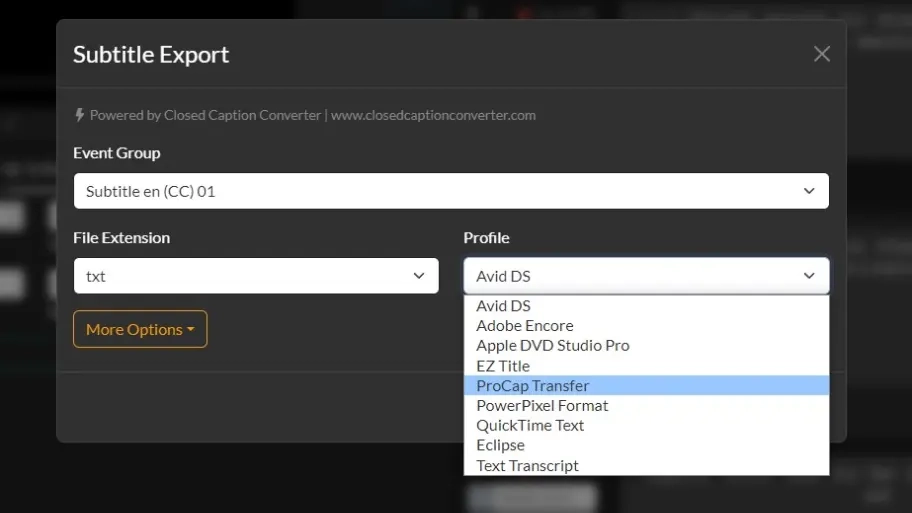
Transcripts can be exported in multiple formats such as a dialogue list, subtitle file (e.g. SRT), and more.
Start a Free Trial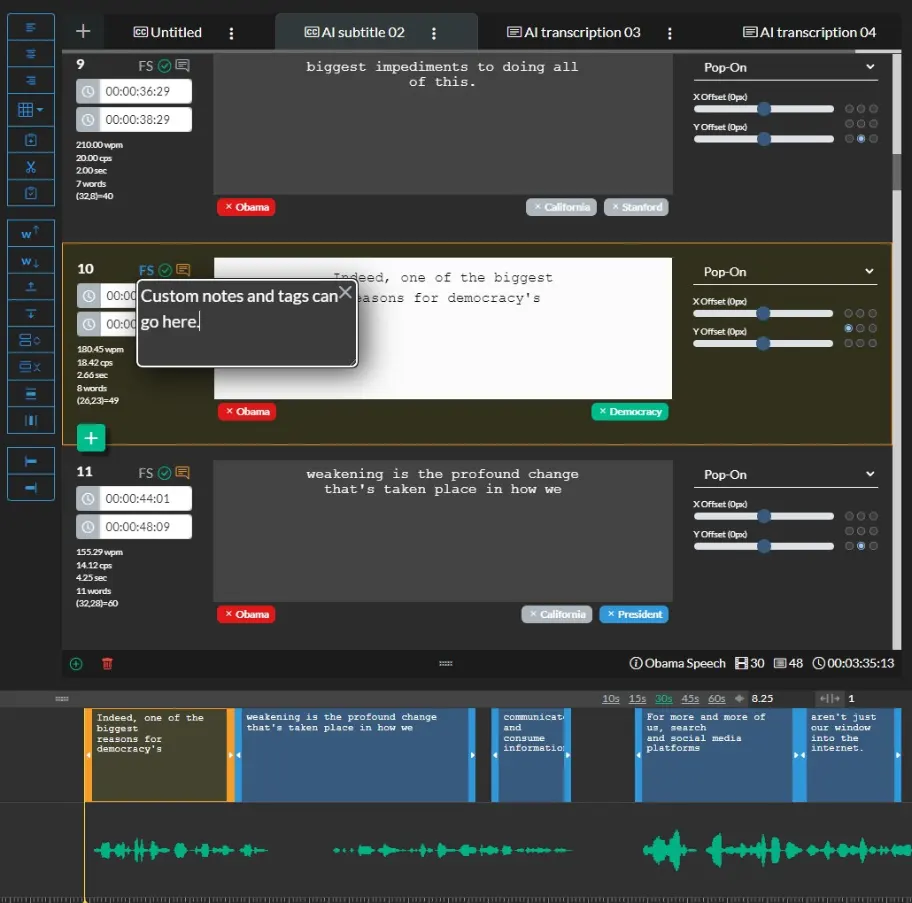
How It Works
From raw audio to finished transcript
Three steps to create transcripts and dialogue lists your whole team can build on.
STEP 1
Transcribe
Type manually with playback shortcut keys and typing short forms, or generate a timestamped transcript automatically using AI.
STEP 2
Annotate
Add custom tags, notes, and speaker IDs to any event, giving translators and reviewers the context they need.
STEP 3
Export
Deliver as Microsoft Word (.docx), CSV, plaintext, a dialogue list, or a subtitle file such as SRT.
- 20+Languages and dialects supported by AI transcription
- 3Document export formats — Word, CSV, and plaintext
- $0.10/minAutomatic transcription after the included monthly allowance
Export & Presets
Every deliverable, formatted exactly how your team needs it
Define your document structure once, save it as a preset, and apply the same formatting across every project.
Custom format presets and shared profile settings standardize transcript exports across your team — no more reformatting documents by hand before delivery.
- Microsoft Word (.docx) transcripts
- Excel-compatible CSV dialogue lists
- Plaintext (.txt) exports
- Subtitle files such as SRT
- Shared presets keep team formatting consistent
Use Cases
One transcript, many deliverables
The transcript lives alongside your timed text, so every deliverable stays in sync.
As-Broadcast Scripts
Document exactly what aired with timed events, speaker IDs, and notes — exported to Word or CSV for your records.
Dialogue Lists
Produce dialogue lists with custom metadata for localization teams, including context around key terms and phrases.
Subtitle Files
Turn a finished transcript into timed subtitles and export SRT and other formats — no re-typing required.
Closed Caption Creator For New Users
Learn how to create closed captioning and subtitles using Closed Caption Creator. Watch our comprehensive 4-part video course, where you'll learn the ins and outs of transcription, timing (spotting), and delivering accurate closed captions.
Watch Now
Ready to get started?
Sign up for a free 7-day trial of Closed Caption Creator and receive access to our video tutorials and courses.
Create closed captioning, subtitles, transcripts, and audio descriptions all in one application. Closed Caption Creator is made for broadcast and captioning teams who are committed to delivering high-quality, accessible video. Sign up now, or contact us for a live demo.
Transcript and dialogue list questions
Details on transcribing, metadata, export formats, and automatic transcription pricing in Closed Caption Creator.
Transcripts can be exported as Microsoft Word (.docx), Excel-compatible CSV, and plaintext (.txt) files. The same project can also produce deliverables such as dialogue lists and subtitle files like SRT, since the transcript lives alongside the timed text in one application.
Yes. Custom metadata such as tags, notes, and speaker IDs can be added to any event in the project. This metadata travels with the transcript and helps other team members, for example giving translators context around key terms and phrases they need to localize.
Yes. Closed Caption Creator can generate a transcript automatically using AI, including timestamps aligned to the media. Manual transcription is also supported, so users can type the transcript themselves with playback shortcut keys, or combine automatic output with a manual review pass.
Additional automatic captioning and transcription is charged at $0.10 per minute of content once the included monthly allowance is used. Minutes do not carry over between months. Current usage can be checked in the application under Help, then Reporting and Usage.
Manual transcription uses shortcut keys to control media playback, keeping the typist's hands on the keyboard. Short forms expand repeated words or sentences automatically, which speeds up typing long programs. The result is a timed transcript ready for captioning, subtitling, or export.
Yes. Closed Caption Creator supports custom format presets and shared profile settings for transcript exports. A team can define how its documents are structured once, save that as a preset, and apply the same formatting consistently across projects and team members.